Introducing the Intricacies of Layout and Manufacturing at a Metal Foundry
The style and production processes at a metal foundry include a series of complex actions. Each stage, from picking resources to melting and casting, plays a crucial role in the end product. Metal Foundry. Accuracy and quality assurance are critical in this sector. Yet, as modern technology developments, brand-new advancements are emerging. These developments might redefine standard practices. What ramifications do these modifications hold for the future of metal foundries?
The Melting Process: Transforming Raw Materials Into Fluid Metal
The melting process works as the essential primary step in transforming basic materials into liquid metal, a procedure essential for foundry operations. This phase begins with the cautious selection of steels, which may include light weight aluminum, copper, or iron, depending upon the desired final item. Each material is examined for pureness and make-up to assure excellent melting problems.
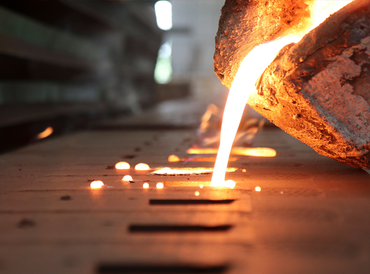
As the metals reach their melting factor, they transform from strong to liquid, allowing for more improvement. This process can likewise include the removal of contaminations via slag development, assuring the top quality of the liquid steel. Inevitably, the successful completion of the melting process lays the foundation for succeeding metalworking procedures.
Molding Strategies: Shaping Metal With Accuracy
Following the melting process, the next phase in metal foundry procedures entails molding strategies that shape the fluid steel into wanted kinds. Various approaches are used, each chosen based upon the particular requirements of the job. Sand casting, among one of the most common methods, utilizes a mixture of sand and binder to produce molds that can be quickly shaped and recycled. An additional method, financial investment casting, involves creating a wax pattern that is coated in a ceramic covering, permitting for detailed styles and high accuracy.
Die casting, in contrast, uses high-pressure to infuse molten steel right into steel mold and mildews, resulting in sturdy and uniform products. Additionally, the selection of molding method affects the cooling rate, surface finish, and dimensional precision of the last product. Understanding these techniques is vital for enhancing design and guaranteeing the successful production of steel parts customized to particular applications.
Casting Techniques: From Prototype to Production
Numerous casting methods are employed in metal factories to change from prototype advancement to major manufacturing. Amongst these techniques, sand spreading sticks out for its flexibility and cost-effectiveness, making it ideal for both big and small manufacturing runs. Financial investment casting, known for its precision, is commonly made use of for complex geometries, enabling great details in the final item. Die casting, ideal for high-volume production, uses liquified steel injected into mold and mildews, offering excellent surface area finish and dimensional precision.

Top Quality Control: Ensuring Excellence in Every Pour
While the spreading process can vary significantly between approaches, keeping extensive quality assurance is vital to ascertain that every put fulfills the needed requirements. Quality control in a metal foundry includes a collection of systematic checks and assessments designed to identify problems early in the production procedure. This consists of careful assessments of resources, surveillance of melting temperature levels, and evaluations of mold honesty.
Foundry workers employ numerous screening strategies, such as non-destructive screening and dimensional verification, to establish that spreadings attain preferred requirements. In addition, adherence to developed industry standards and qualifications enhances the integrity of the last item.
Responses loops are additionally critical; any discrepancies kept in mind during top quality analyses are analyzed to fine-tune procedures and reduce future mistakes. Eventually, a society of quality control cultivates not only client fulfillment but also a reputation for excellence in the competitive landscape of metal production.
Innovations and Technologies: The Future of Metal Foundries
The landscape of metal foundries is swiftly advancing, driven by advancements in innovation and ingenious techniques. Automation and robotics are changing standard operations, boosting efficiency and accuracy throughout production. Automated putting systems and robot arms minimize human error, bring about better outputs. In addition, the combination of expert system is making it possible for anticipating maintenance, maximizing equipment performance, and minimizing downtime.
Additive manufacturing is becoming a game-changer, permitting rapid prototyping and the development of intricate geometries that were formerly unattainable. This technology promotes the customization of metal parts, dealing with details client requirements without considerable time hold-ups.
Sustainability is likewise a vital focus, with shops adopting greener methods, such as reusing scrap steel and using energy-efficient heaters. These technologies not just enhance efficiency but also align with worldwide efforts in the direction of eco accountable production, ensuring the future of metal shops remains robust and competitive in a transforming industrial landscape.
Regularly Asked Concerns
What Types of Metals Are Frequently Used in Factories?
Common metals utilized in foundries consist of aluminum, cast iron, steel, brass, and bronze (Metal Foundry). Each steel has distinct properties, making them appropriate for different applications in sectors such as auto, aerospace, and building and construction, to name a few
Just How Do Factories Handle Waste and Environmental Effect?
Factories handle waste and ecological influence by applying reusing programs, using see here sophisticated purification systems, and sticking to stringent regulatory criteria. They usually invest in lasting modern technologies to decrease emissions and promote responsible resource use throughout their operations.
What Security Steps Remain In Area for Employees?
Factories apply various safety and security procedures for workers, including personal safety tools, appropriate ventilation systems, regular safety and security training, emergency feedback protocols, and stringent adherence to work-related health laws to lessen dangers connected with hazardous products and equipment.
How Long Does the Whole Production Process Usually Take?
The entire production procedure generally takes numerous weeks, relying on the intricacy of the design and the materials made use of. Elements such as mold and mildew prep work, melting, and cooling time significantly affect the general duration of manufacturing.
What Are the Main Tests Dealt With by Metal Factories Today?
Metal shops today deal with difficulties such as climbing material expenses, rising and fall need, environmental policies, proficient labor lacks, and preserving quality assurance. These problems complicate manufacturing effectiveness and success in a significantly affordable market.
The design and production processes at a metal foundry entail a collection of detailed actions. The melting procedure offers as the important initial action in changing raw products right into liquid metal, a procedure crucial for foundry procedures. Following the melting process, the next phase in metal foundry procedures involves Check This Out molding strategies that form the liquid metal into desired forms. Numerous spreading techniques are used in steel factories to shift from model advancement to full-scale manufacturing. Quality control in a metal foundry encompasses a series of organized checks and assessments made Learn More Here to recognize flaws early in the production procedure.
Comments on “From concept to component: how Metal Casting brings products to life”